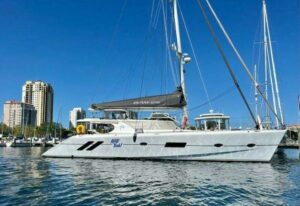
What 15 years of selling them new teaches you about buying one today.
Beneteau has been building sailboats for more than a century. For the last twenty years, Jon and Anne have been part of that story. After arriving in Deltaville in 2005, they managed a Beneteau dealership where they spent fifteen years selling new & used Beneteaus and building an extensive knowledge of the brand above and below the waterline. And when they opened YaZu Yachting in 2020, they brought their Beneteau expertise with them.
What follows is what that twenty years of experience looks like, model by model and deck by deck.
A BRAND BUILT AROUND TWO COMMITMENTS
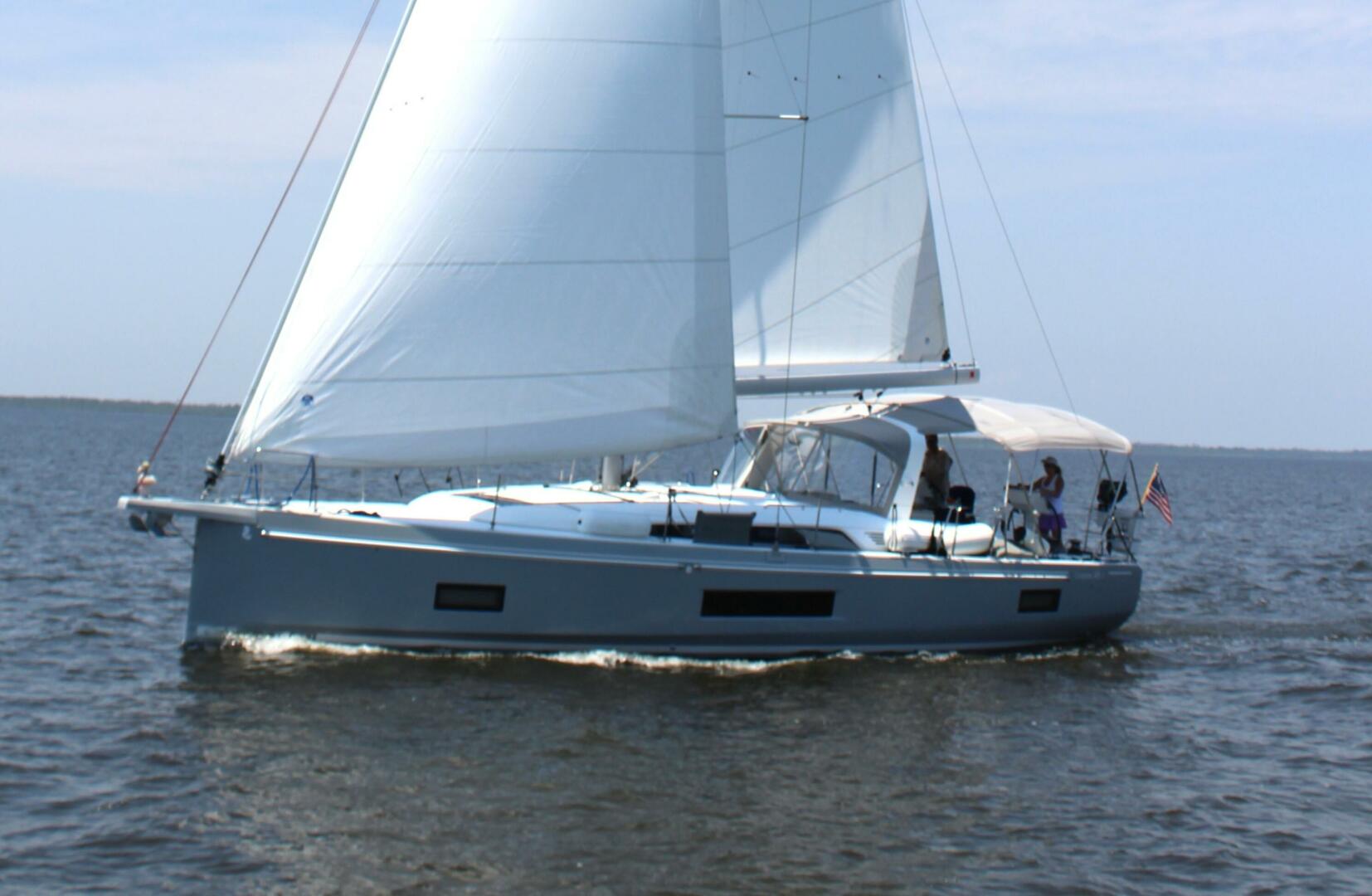
The modern Beneteau catalog breaks into three families of sailboats: the Oceanis, the Oceanis Yacht, and the First. Each one is designed with a specific sailor in mind, and understanding which family a boat belongs to tells you most of what you need to know about what it was built to do.
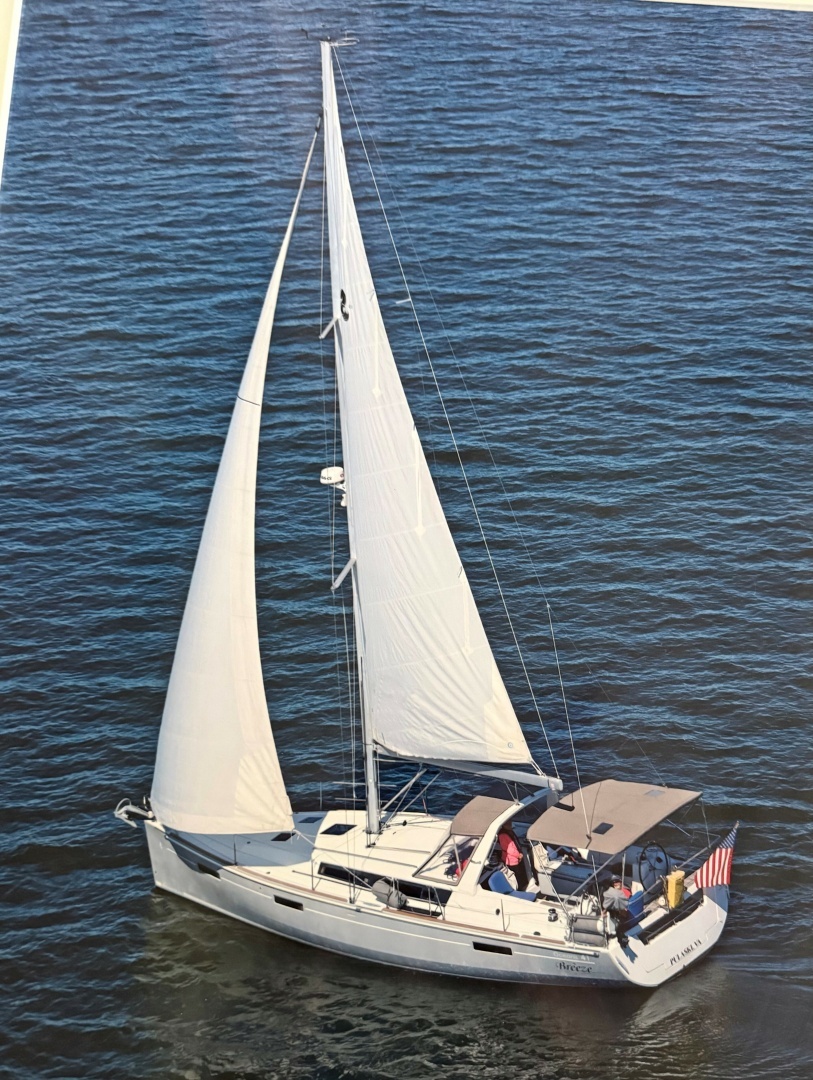
The Oceanis is the world’s best-selling cruising sailboat line, and the charter market is a large part of why. Beneteau has supplied charter fleets since the earliest Oceanis design in 1986, and that brief shapes everything: easy to sail, easy to maintain, spacious enough that six people can live aboard for a week without getting on each other’s nerves. The current lineup runs from the Oceanis 30.1 up to the Oceanis 52, with the 37.1, 40.1, 42, and 47 sitting in the heart of the range where most buyers land.
The Oceanis Yacht, which currently comes in a 54 and a 60, is a step up in size and finish. Slender lines, wraparound windows, in-mast furling and electric winches standard, solid wood below. These are boats designed to be sailed short-handed on ocean passages. YaZu has a 2022 Oceanis Yacht 54 in current inventory.
The First line is different in purpose. Where the Oceanis is built for comfort and access, the First is built to go fast. The heritage here includes a Sydney Hobart win by the First 40.7, a Bruce Farr design from 1997. The newer First 36 won the European Yacht of the Year in 2023. The new First 30, launched in 2025, is a planing cruiser in a category Beneteau essentially invented on their own.
THE HULL
One thing that distinguishes a Beneteau from many other production boats is how they use beam. The Oceanis line carries wide beam well forward, and that width is structural to everything else: it creates form stability rather than relying heavily on ballast, and it creates interior volume without lengthening the boat. The Oceanis 37.1 has a beam of nearly thirteen feet. The Oceanis 40.1 runs thirteen feet nine inches.
The hulls use double chines running the full length of the boat. When the boat heels, the leeward chine submerges and creates a V-section that contributes to straight tracking. The bow sections are flared so the waterline stays narrow in light air, reducing drag, while the overall width takes over as the boat heels to provide stability. All current Oceanis models use twin rudders, canted outward, which keeps the leeward rudder effective at angles where a single centerline rudder would begin to lift clear of the water.
Keel options on current models include a deep performance fin and a shoal draft option. On the 37.1, deep draft is 6 feet 11 inches and shoal is 5 feet 4 inches, with a centerboard extension for upwind sailing. That makes these boats viable on the Chesapeake, where draft matters.
The construction is solid laminate hull with vacuum-infused foam sandwich deck. Cast iron keel bolted through. These are production boats built at volume in France, and they are built accordingly: well, with good quality control, but not to the standard of a semi-custom offshore passage-maker. For most cruising use, that is exactly the right trade-off.
BELOW DECKS
Beneteau makes more light below decks than almost any other production builder in this price range, and they do it through a combination of choices rather than one design decision. Hull ports in the topsides, multiple deck hatches, high overhead clearance, and interior materials that stay light. Current production Oceanis boats (the .1 series, from 2019 onward) use Alpi engineered wood with a walnut or oak surface finish and Iroko cockpit decking in place of teak. Older Oceanis boats used teak-look laminates below and actual teak on deck. The finish looks different; the layout logic does not.
The Oceanis 40.1 saloon has six-foot-three headroom and enough counter space to cook an actual meal. The 37.1 offers three layout configurations depending on how you weight cabins, stowage, and berth count. The forward berth on almost every current Oceanis is a centerline double that uses the full beam. Headroom in the forward cabin is typically close to standing.
The Oceanis Yacht line takes this further with solid wood and quality upholstery throughout. The wraparound windows that define the exterior read below as light sources on all sides. These are boats that feel like somewhere to live, not just somewhere to sleep.
HOW THEY SAIL
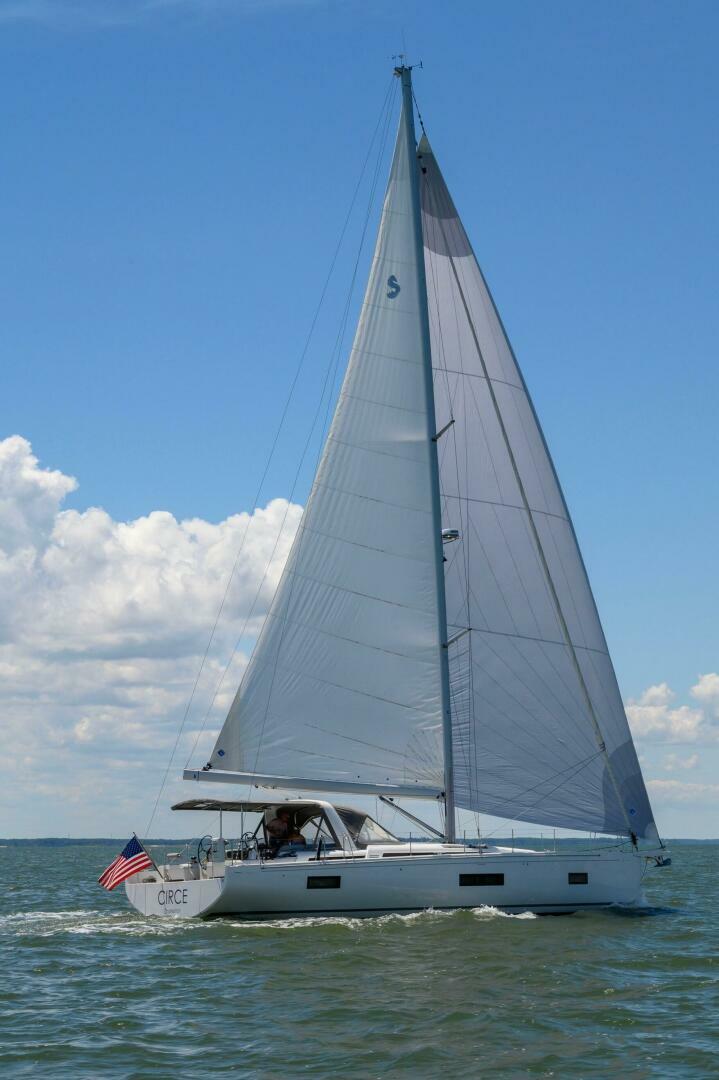
The current Oceanis rig is a 9/10 fractional setup with deeply swept double spreaders at approximately 40 degrees. There is no backstay, which keeps the aft end of the cockpit clear and simplifies the rig. All lines lead aft. The standard mainsail is in-mast furling, and roughly ninety percent of buyers choose it. A battened, square-top slab-reefed main is available as a performance option, and for sailors who want to get more out of the boat upwind, it is worth the difference.
The self-tacking jib is standard, which makes tacking genuinely manageable short-handed. Most owners add a code zero on a furler from the bowsprit, and the light-air performance improves significantly when they do.
In testing, the Oceanis 37.1 sailed to 32-35 degrees off apparent wind, tacking through 90-100 degrees in Force 4 conditions. The Oceanis 40.1 hit 7.5 knots close-hauled in 15 knots of wind and topped 8 knots on reaches. The helm is balanced and neutral. Reviewers describe that as either reassuring, for cruisers who value predictability, or a little disconnected, for sailors who want feedback through the wheel. Both characterizations are accurate. The twin rudder system keeps the boat tracking well at high heel angles, and the wide chined hull means the boat stays fairly upright and does not want to be pushed hard. These are not boats that reward being sailed to the edge.
The swept-spreader rig has real trade-offs: you cannot add forestay tension upwind, and the main cannot be eased far on a run. Most Oceanis owners are not bothered by this. Sailors who want to race at the front of the fleet will prefer the First line.
THE SWIFT TRAWLER
Beneteau’s Swift Trawler line is the power side of the catalog. These are semi-displacement motor yachts designed for range and liveability, not speed. Models run from the ST 30 to the ST 65, with the 35, 41, 47, and 50 the most common in the brokerage market. The hull form is efficient at cruising speeds, typically 8 to 10 knots, where fuel consumption is modest enough for serious passages.
The design brief shares something with the Oceanis: maximize interior volume and light. Swift Trawlers have high freeboard, large windows on all sides, and an interior that uses every inch. The saloon is a proper living space. The galley is full size. On the larger models, the master cabin is below the waterline amidships, where motion is minimized at sea. These are boats built for extended time aboard.
The Swift Trawler buyer is not the same person as the Oceanis buyer, but they often arrive at the question the same way: they want to go far, live well while they are doing it, and manage the boat with two people. If your passage-making plan is power rather than sail, this is the Beneteau line to understand.
WHAT OWNERS SAY
The common thread in Oceanis owner feedback is space and ease. The boats are forgiving, they are easy to sail short-handed, and the below-decks space holds up after months of living aboard. Owners frequently upgrade sails, add bow thrusters, and move from in-mast furling to a battened main as they put more time on the boat. Resale demand is strong, partly because so many buyers have chartered Beneteaus and already know what they are getting.
The more experienced sailors who end up in the First line come for different reasons. The 40.7-era boats have a strong offshore reputation and show up regularly in ocean race results. The newer First 36 has won serious races. These are boats for sailors who know what they want and are not buying extra beam for the charter party.
BENETEAU AT YAZU
We carry an active inventory of Beneteau listings. If you are considering a Beneteau and want to talk through what the options look like at different price points, or what to watch for when evaluating a specific boat, reach out. We know this line from the inside, and we are glad to help you find the right one.