A boat that makes its own power is a quieter, easier boat to live with. Solar panels can cut generator hours, keep the batteries topped up at anchor, and give you the freedom to stay where the view is good. The first question most owners face is flexible vs rigid marine solar panels, and the right answer depends on your boat’s layout, how much power you use, and how you cruise.
FLEXIBLE MARINE SOLAR PANELS
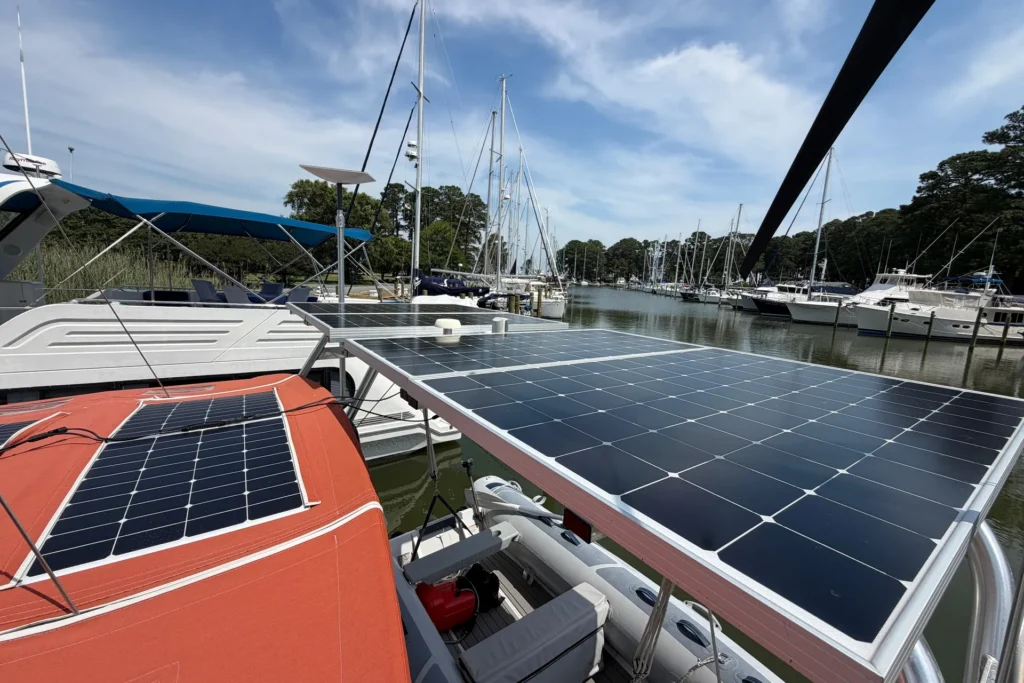
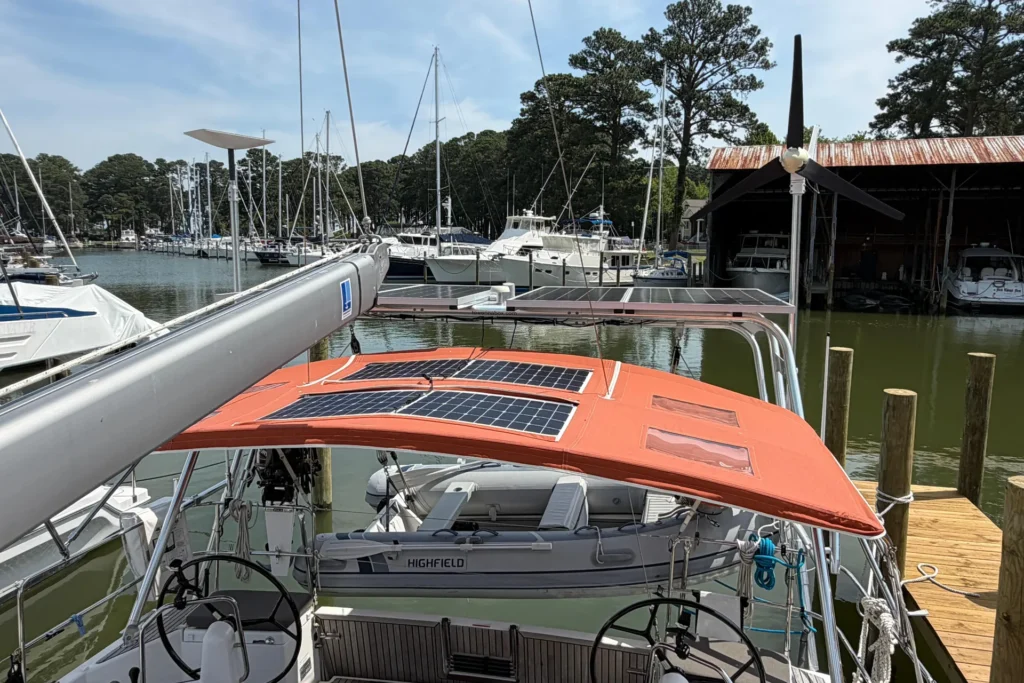
Flexible panels are lightweight and thin, which makes them a good fit for curved surfaces such as a bimini or dodger, and for boats where weight and mounting space are limited. The trade-off is heat and wear. Mounted directly against a surface, they run hotter, and heat reduces output. They also take more punishment from repeated flexing, foot traffic and years of sun, so they usually have a shorter service life.
RIGID MARINE SOLAR PANELS
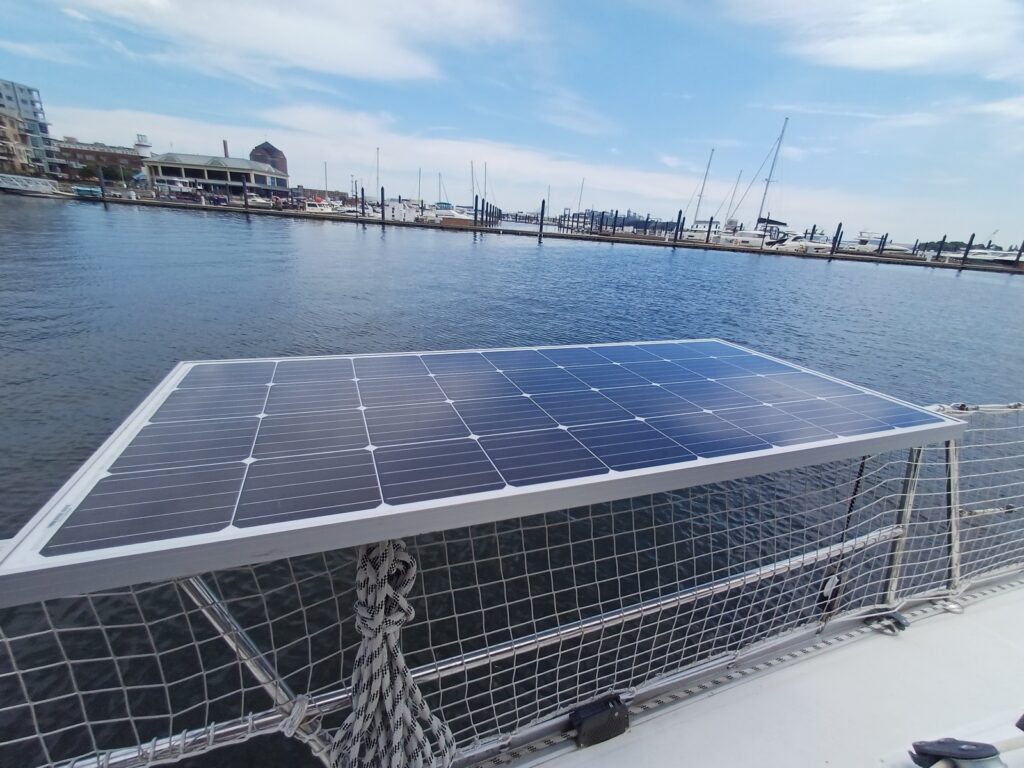
If your boat has a hardtop, a stern arch or davits, rigid panels are generally the better choice. They typically offer higher efficiency, better airflow for cooling, a lower cost per watt and a longer service life. They are heavier and bulkier, but over the long run they are often the more economical investment. If your boat has room for a properly mounted rigid panel, choose it for the long haul, not the lowest price. No arch or hardtop? Rigid panels can still work on a flip-up rail mount, hinged to the lifelines so they tilt toward the sun at anchor and fold out of the way underway. Choose flexible when curved surfaces, limited space or weight make it the practical solution.
THREE THINGS TO CONSIDER BEFORE YOU BUY
Available space. Match the panel to the surfaces and clearance your boat actually has, from the hardtop to the arch to the bimini.
Daily power use. Refrigeration, an autopilot and your navigation electronics decide how much solar you need. As a general guideline, plan on roughly 300 to 500 watt-hours of daily production from each 100 watt panel in favorable conditions. Real output varies with sunlight, season and shading.
Shading and installation. Radar arches, antennas and rigging can cut output significantly. Good panel placement, an MPPT charge controller and suitable wiring help every panel produce what it can.
MARINE SOLAR PANELS ON TWO YAZU BOATS
Two YaZu boats show what a well-planned system looks like. Heron, a 2001 Beneteau Oceanis Clipper 393, carries 870 watts of solar, including rigid panels on flip-up mounts along her lifelines. Paired with her lithium batteries and a Victron solar controller, it keeps the bank charged with enough left over to cook on the induction cooktop.
Cinnamon Girl, a 2022 Jeanneau 440, uses both types on one boat. Rigid panels sit on her arch, where there is room and airflow, while shade tolerant flexible panels cover the bimini and foredeck. Paired with lithium batteries, a combination of 48 volt and 12 volt systems and a Termodinamica air conditioning system installed by BoatRX, that solar makes her set for quiet, off-grid cruising.
A WINTER PROJECT, AND A SELLING POINT
Solar is a natural project while the boat is out of the water. Size the system to your actual electrical needs, allow for cloudy days, and make sure your charge controller and battery bank can handle the added power. A well-planned installation means less generator time, quieter anchorages and more freedom on the water.
If you are thinking of selling, a thoughtful solar system is worth documenting in full: panel type, wattage, controller and batteries. And if you are shopping for a boat that has already done the work, browse our listings or call us at (804) 776-5135. Ready to sell? Learn more about listing your boat with YaZu.