Fall is the season to look hard at your dock lines. Autumn brings some of the year’s highest tides to the Chesapeake, and a northeaster or a late-season tropical system can push water higher still. A boat that sits happily on her lines all summer can end up hanging from them when the water rises and falls more than usual. The good news is that a few well-planned adjustments, made before the next big tide, are all most boats need.
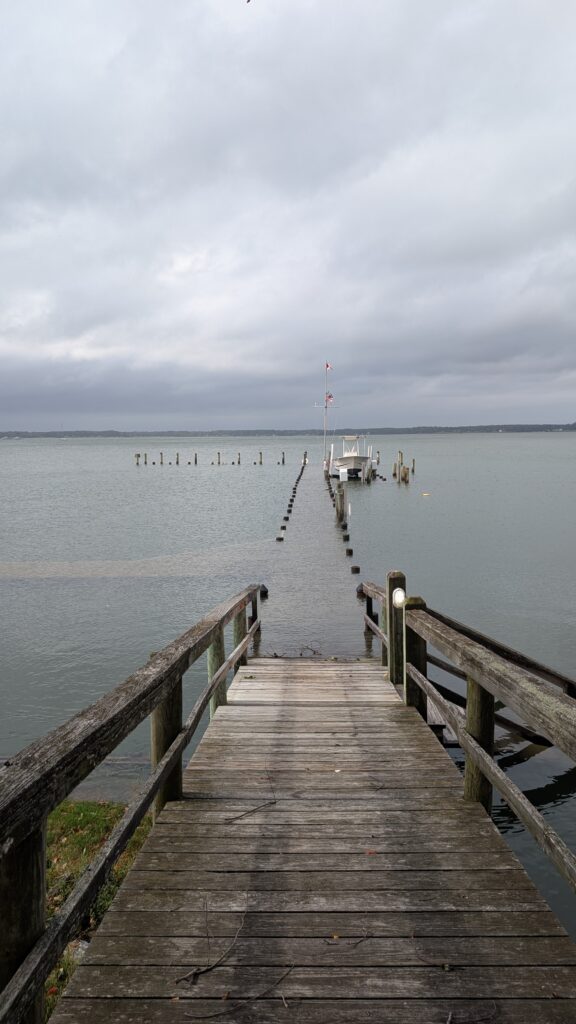
KNOW THE TIDE AS WELL AS THE FORECAST
As Matt Lambert puts it, being aware of the tide is as important as being aware of the weather forecast. Check the tide tables alongside the forecast, and remember that strong wind can push water higher than the tables predict. Plan to be at the dock, or to have someone there, around the top of the tide.
GIVE YOUR DOCK LINES ROOM TO MOVE
The most common mistake is lines that are too short and too tight. Your boat has to rise with the water, and a line with no slack has nowhere to go except into a cleat, a piling or a piece of hardware. Use bow and stern lines long enough to follow the full rise and fall, and lead them at a gentle angle. Spring lines, which run fore and aft from midships, keep her from surging forward and back. If your dock is fixed rather than floating, check your lines at both high and low water, because a setup that looks perfect at low tide can be tight as a drum at high tide.
PROTECT AGAINST CHAFE
Chafe is what usually parts a dock line. Look at every point where a line passes through a chock, around a piling or across a rail. Add chafe guard or sleeves where lines bear on edges, and replace any line that is stiff, glazed, flattened or frayed. Check your cleats too, including the backing plates and fasteners, since a line is only as strong as what it is tied to.
CHECK FENDERS AND SHORE CONNECTIONS
Higher water changes where your fenders ride. Re-set them so they stay between the hull and the dock or pilings at every tide, and add extras where a piling or finger pier sits close. Then look at what connects your boat to shore. Shore power cords and water hoses need enough slack to follow the boat up and down, and a cord that dips into the water or pulls tight at the connection is a problem you want to catch before the tide does.
CHECK AGAIN AFTER EVERY STORM
Do not set your lines once and walk away. Look at them after each high tide that tops the usual level and after every storm. Lines stretch, knots shift and chafe develops in places you did not expect. A quick walk down the dock is cheap insurance, and it is the habit that catches a small problem before it becomes an expensive one.
IF YOUR BOAT IS LISTED WITH US
Caring for a listed boat remains the owner’s responsibility, but you are not on your own. Our brokers often check on a seller’s boat when they are at the docks, and the YaZu crew is always glad to lend a hand where we can. If a storm or a king tide is on the way and you cannot get to the dock, call us at (804) 776-5135 and we will see what we can do. Thinking of selling this winter? List your boat with us or see what is on the water now in our listings.